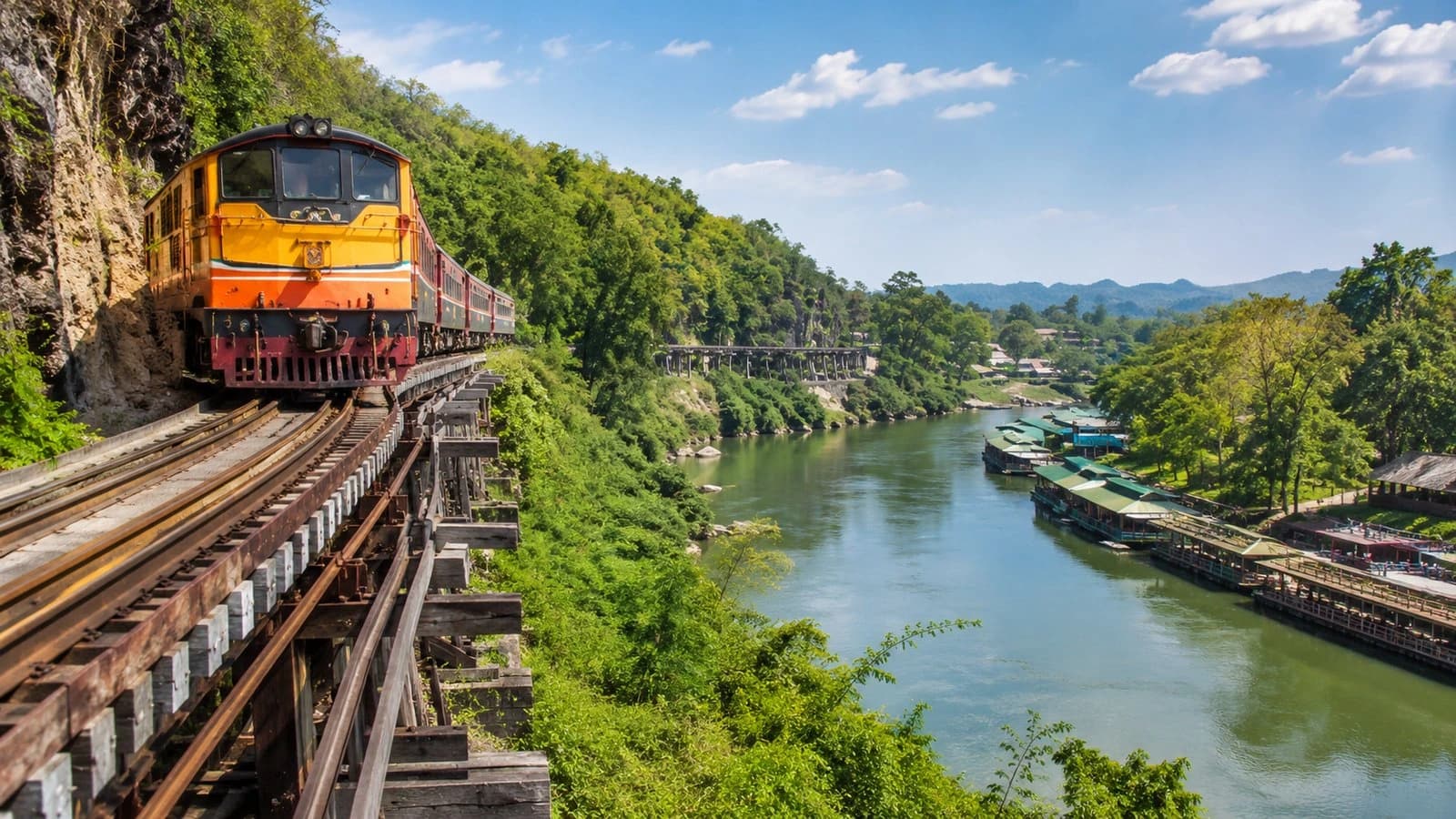
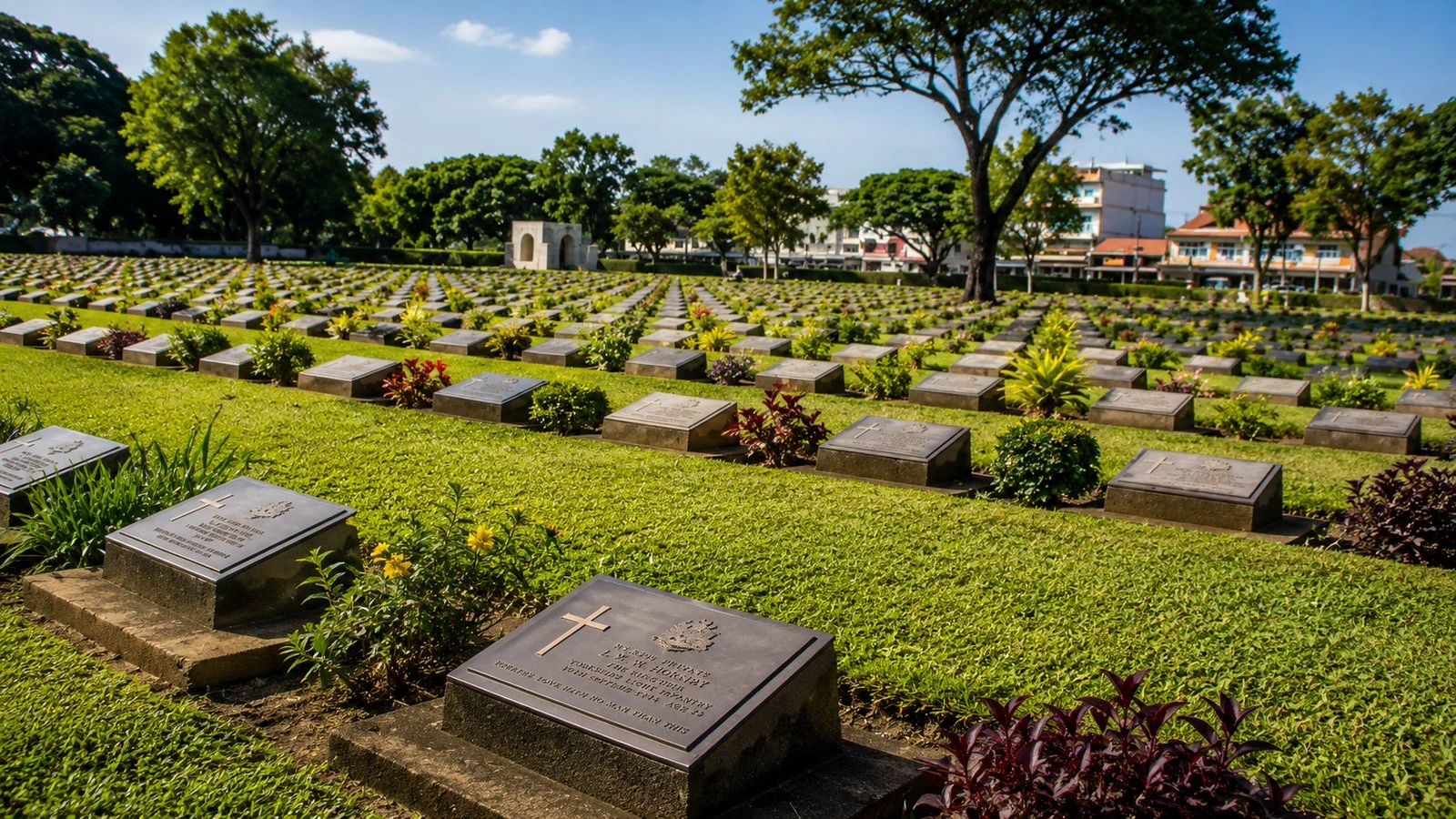
Kanchanaburi is a riverside province about 130 km west of Bangkok, best known for the Bridge on the River Kwai and the World War II Death Railway. It is a different kind of day trip from the markets and temples: part beautiful river country, part open-air war memorial, and easily the most moving destination within reach of the capital.
In 1942 the Japanese army began building a 415 km railway from Thailand to Burma to supply its forces, using around 60,000 Allied prisoners of war and a far larger force of conscripted Asian labourers. The line was pushed through jungle and rock cuttings by hand in about sixteen months, at a horrific cost: roughly 13,000 prisoners of war and as many as 90,000 civilian labourers died of disease, starvation and mistreatment. It earned the name Death Railway honestly.
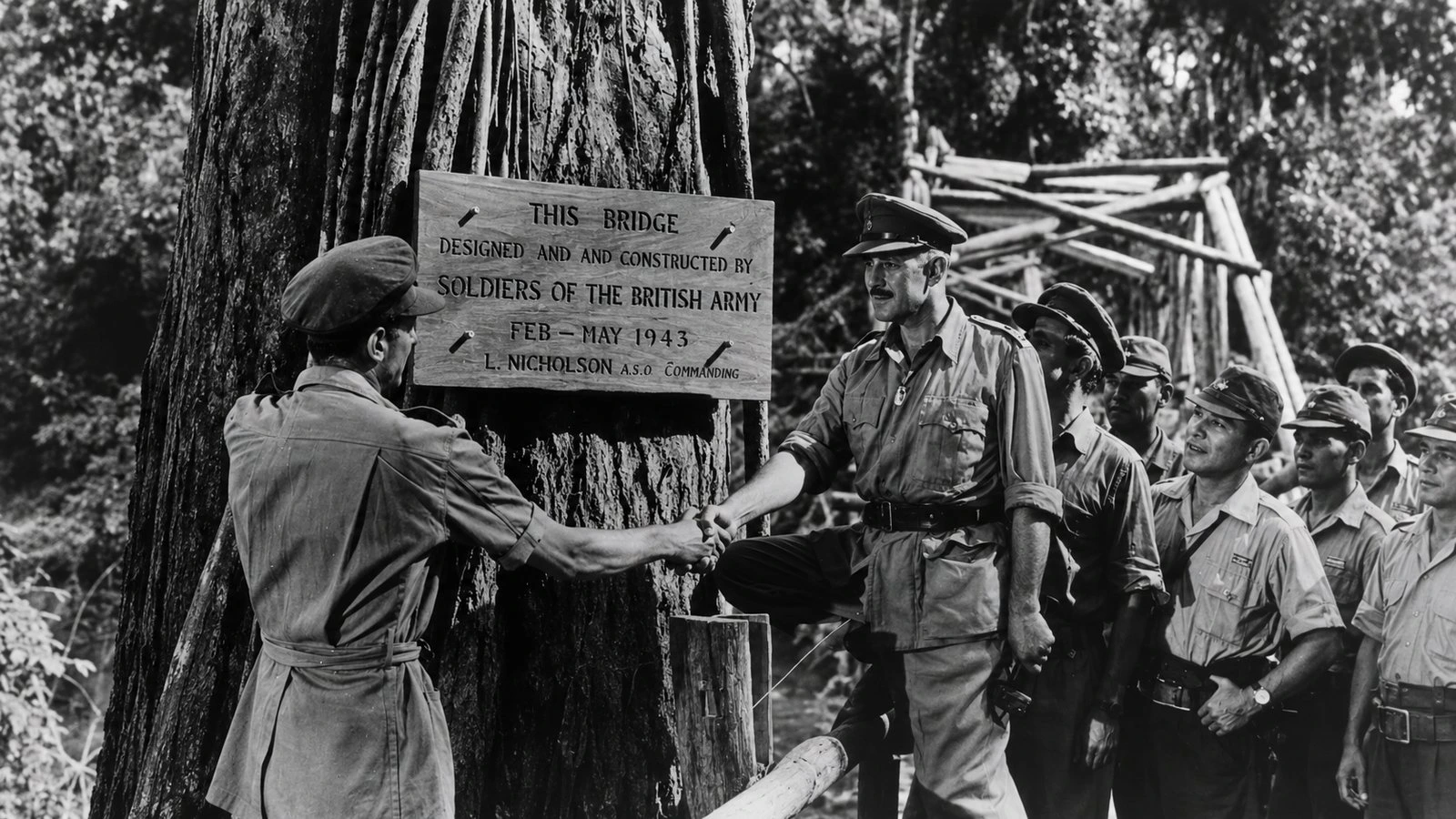
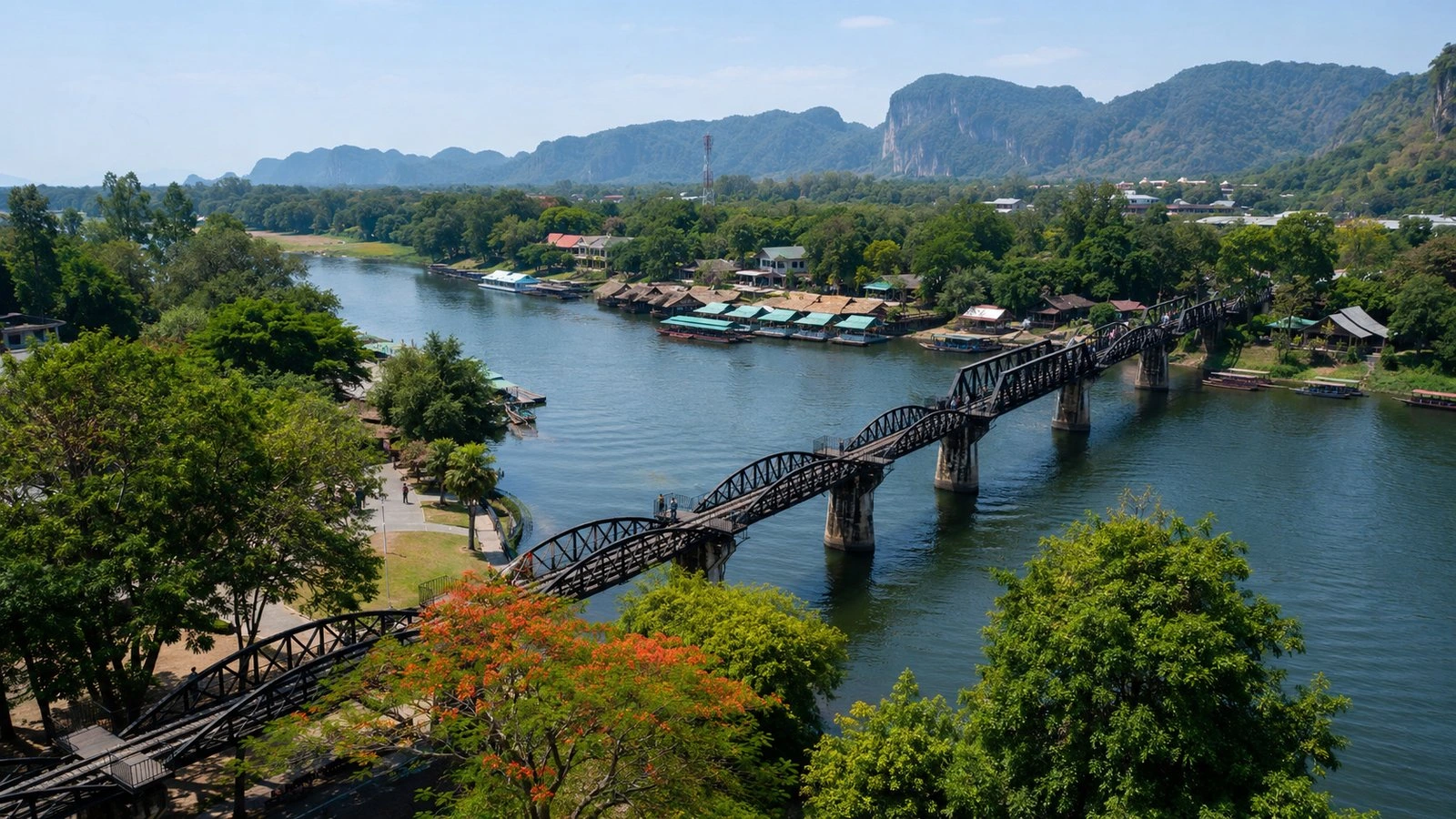
The bridge at Kanchanaburi was one link in that line. Curiously, the river it crosses was not actually called the Kwai at the time: the 1957 film The Bridge on the River Kwai made the name so famous that Thailand later renamed this stretch of the Mae Klong river to Khwae Yai to match the story visitors came looking for. The film is fiction and was not even shot here, but the bridge, the cuttings and the graves are real.
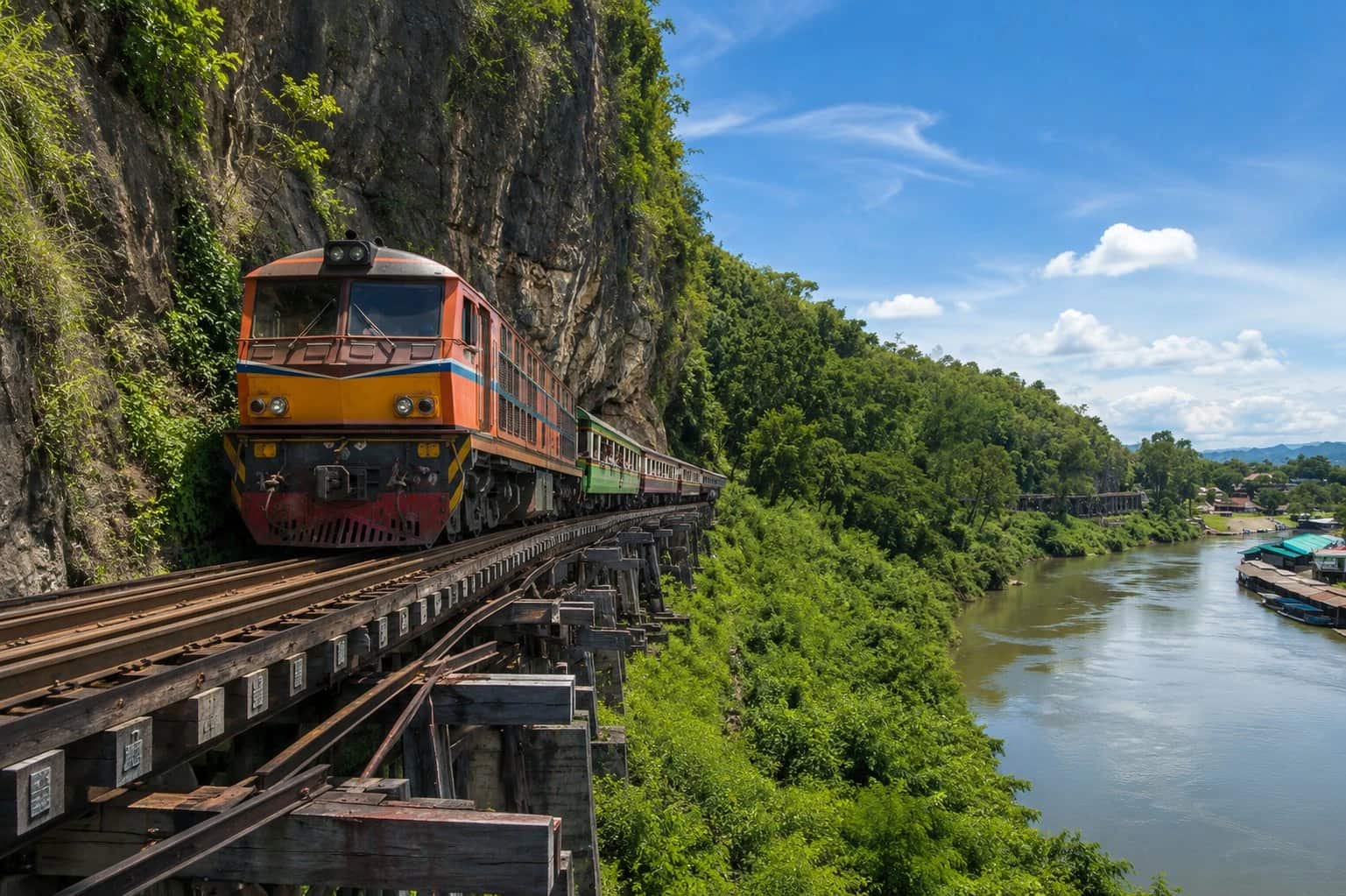
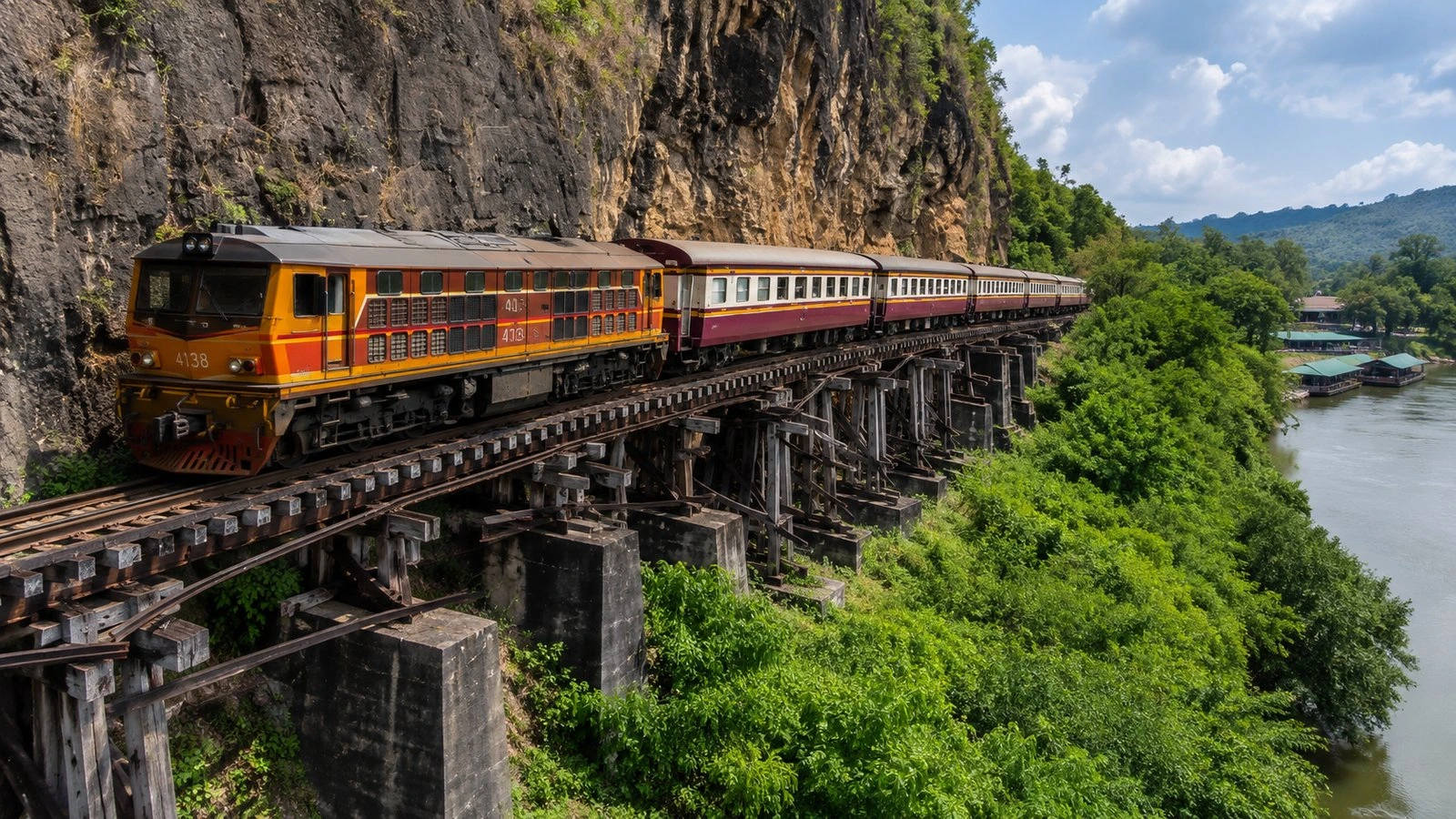
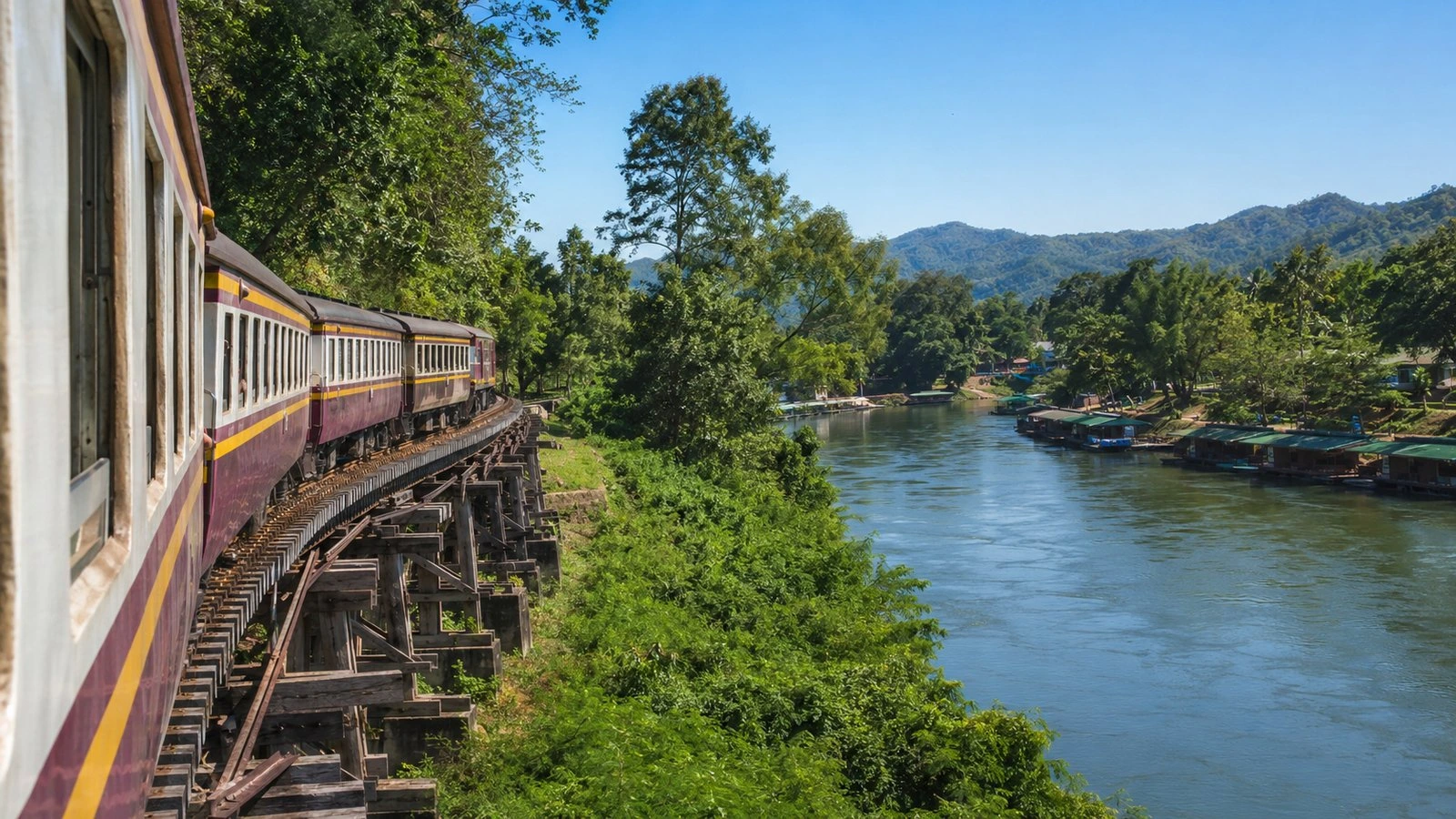
Today part of the line still operates as an ordinary Thai railway, which is why you can ride it. The war cemetery, the museums and the memorials around town are looked after with genuine care, and the atmosphere is respectful rather than grim.
Our Historical Day Tour to the River Kwai (from ฿1,195) covers the cemetery, the Railway Centre museum, a ride on the Death Railway itself and the bridge, with lunch included. If you would rather spend the morning with the elephants, the Elephant Sanctuary and Kanchanaburi tour (from ฿2,395) combines a half day of feeding and bathing the herd at ElephantsWorld with the bridge and the war cemetery in the afternoon.
Kanchanaburi town is about 130 km west of Bangkok, a drive of 2 to 2.5 hours. Your options:
The best time to visit is from November to February, in the cool season, when walking the bridge and standing on open train platforms is comfortable. March to May is very hot in this part of Thailand, so start early, and in the rainy months the river country is at its greenest with showers mostly in the late afternoon, after the day trip pattern is done.
The sights themselves are open year-round, and the Death Railway train runs daily. If you can, aim for a weekday: the bridge gets busy with domestic visitors on weekends and public holidays. Around late November the town also holds its annual River Kwai Bridge festival with a sound-and-light show, which is worth catching if your dates line up.
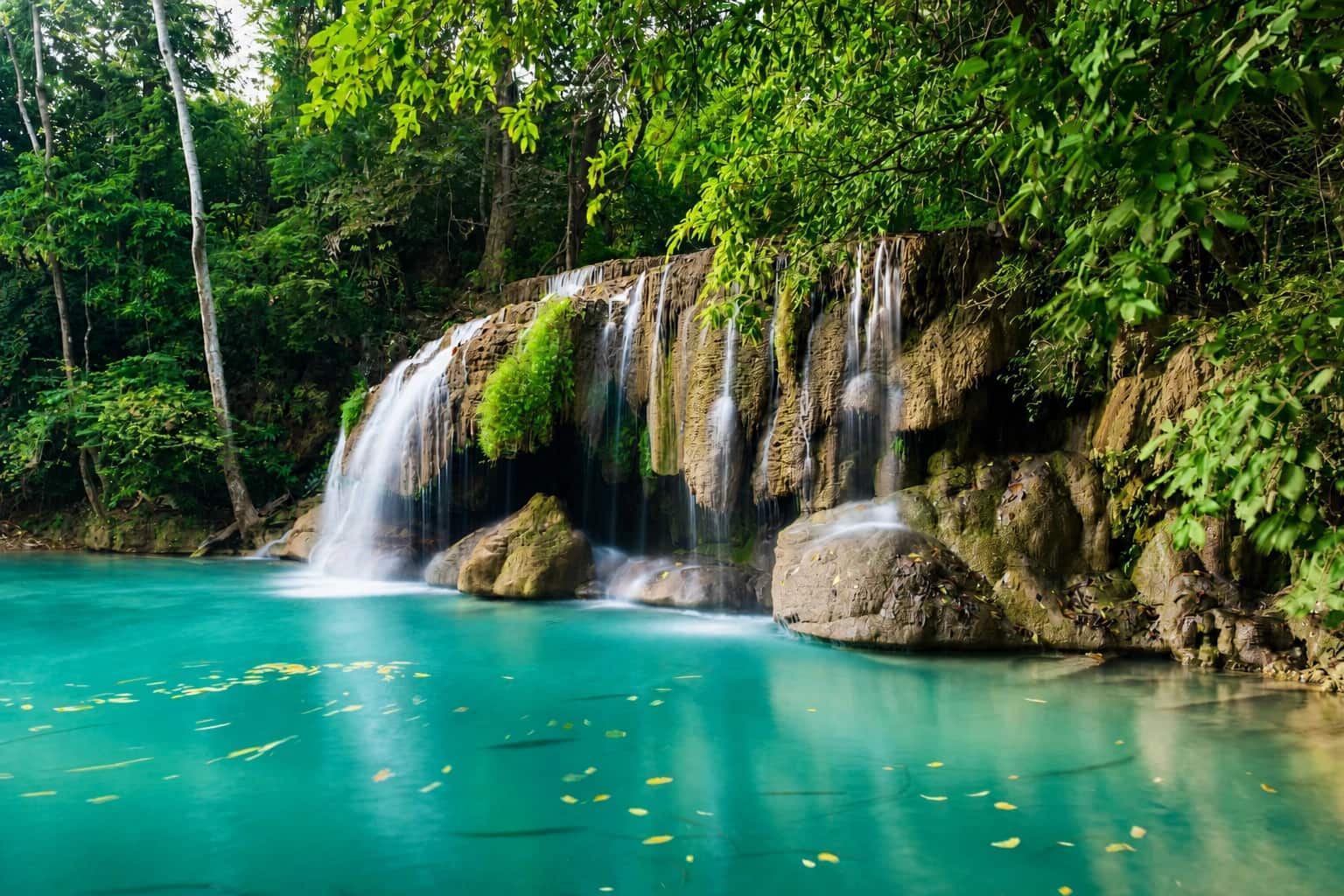
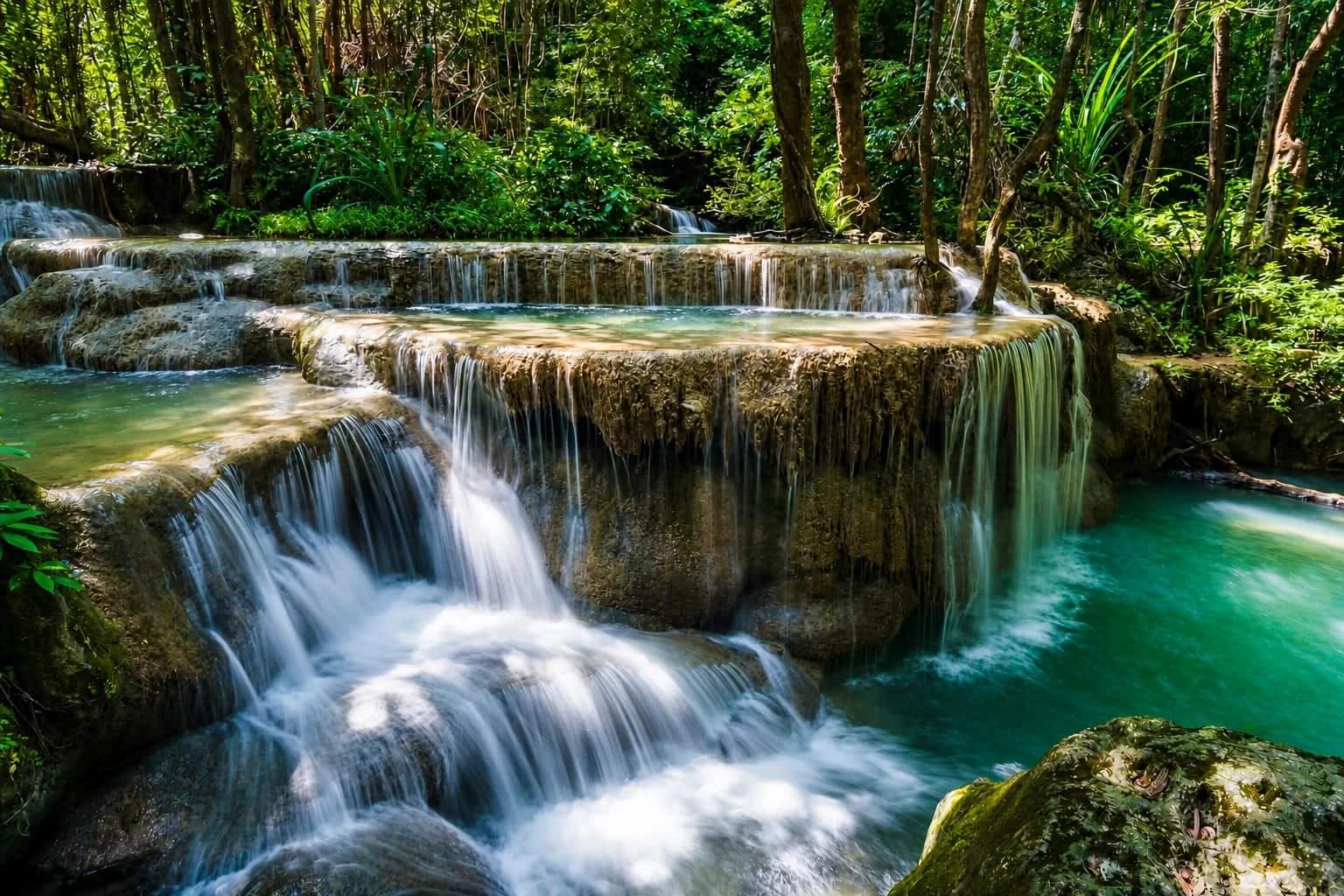
Kanchanaburi lies about 130 km west of Bangkok, where the Khwae Yai and Khwae Noi rivers meet to form the Mae Klong. The bridge and war cemetery are in Kanchanaburi town; the Death Railway ride and ElephantsWorld are further upriver. It is a separate direction from the floating markets, so it does not combine into one day with Damnoen Saduak or Maeklong.
Yes, and for many travelers it ends up the highlight of their Bangkok stay. It is a longer day than the market trips because of the distance, but you get real history you can walk on, a scenic train ride and beautiful river country in one outing.
Yes. The Historical Day Tour to the River Kwai (from ฿1,195) includes a ride on the original Death Railway line, plus the war cemetery, the Thailand-Burma Railway Centre museum, the bridge and lunch.
Yes. The Elephant Sanctuary and Kanchanaburi tour (from ฿2,395) spends the morning feeding and bathing rescued elephants at ElephantsWorld, then visits the Bridge on the River Kwai and the war cemetery in the afternoon. It does not include the train ride; only the historical tour does.
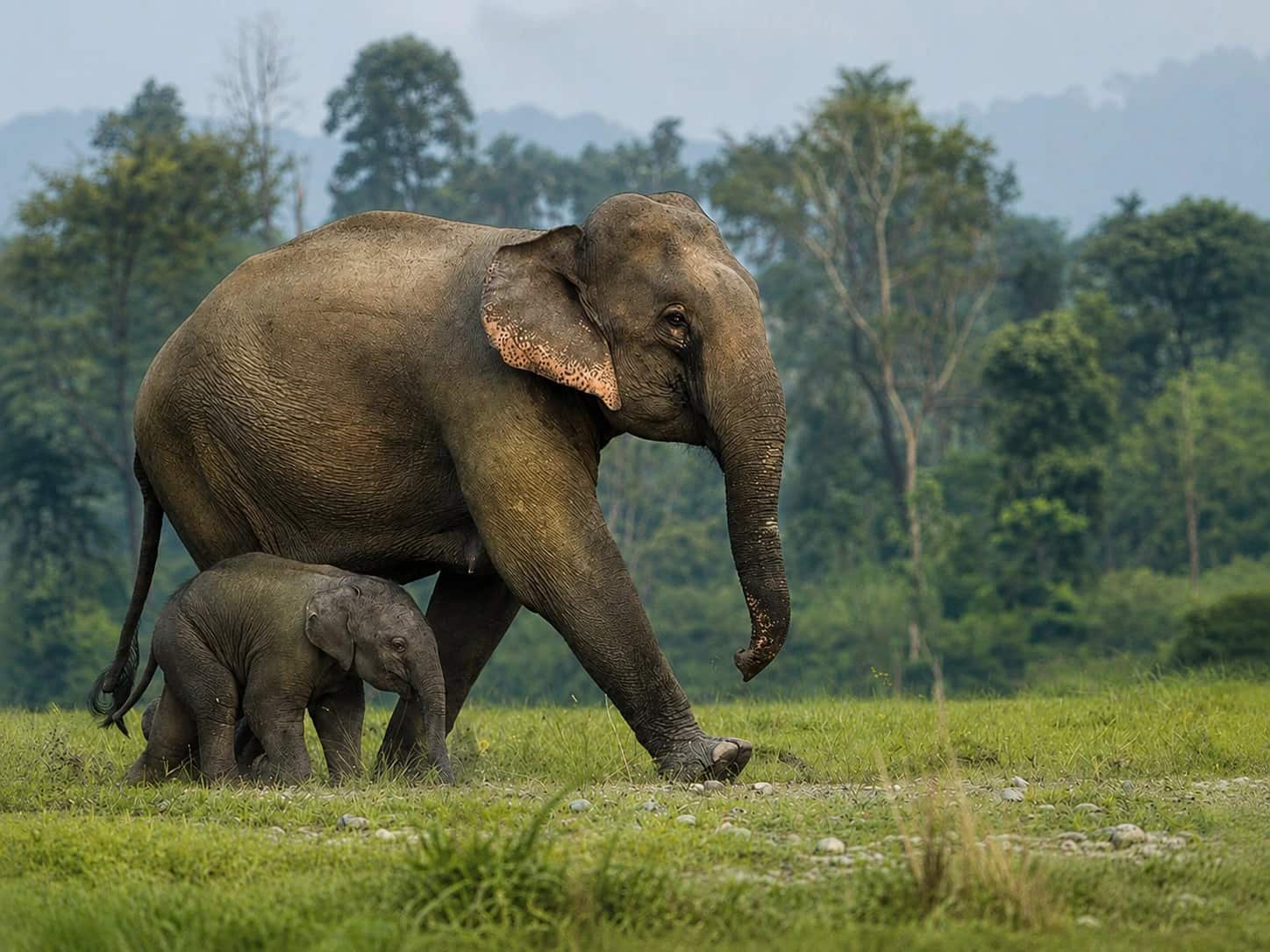
ElephantsWorld is a care-based sanctuary for old, injured and rescued elephants. There is no riding and no performances; visitors help prepare food, feed the herd and bathe them in the river alongside their keepers.
About 130 km west, which is 2 to 2.5 hours by road each way. Both our tours run about 10 hours door to door with hotel pickup in Bangkok or a River City Bangkok meeting point.
Yes, with expectations set. Children tend to love the train ride and the elephants; the museum and cemetery are sobering, and the history deserves an honest, age-appropriate explanation. The day is long, so bring snacks and something for the drive.
The 1957 film is fiction and was shot in Sri Lanka, but the bridge is real: the curved steel spans are the wartime originals, and the straight spans replaced sections destroyed by Allied bombing in 1945. The river was even renamed Khwae Yai so the famous name and the real geography match.
Kanchanaburi lies west of Bangkok, in the same general direction as the Maeklong railway market and the Damnoen Saduak floating market. For the older history of Siam, our Ayutthaya day trips head north instead.